

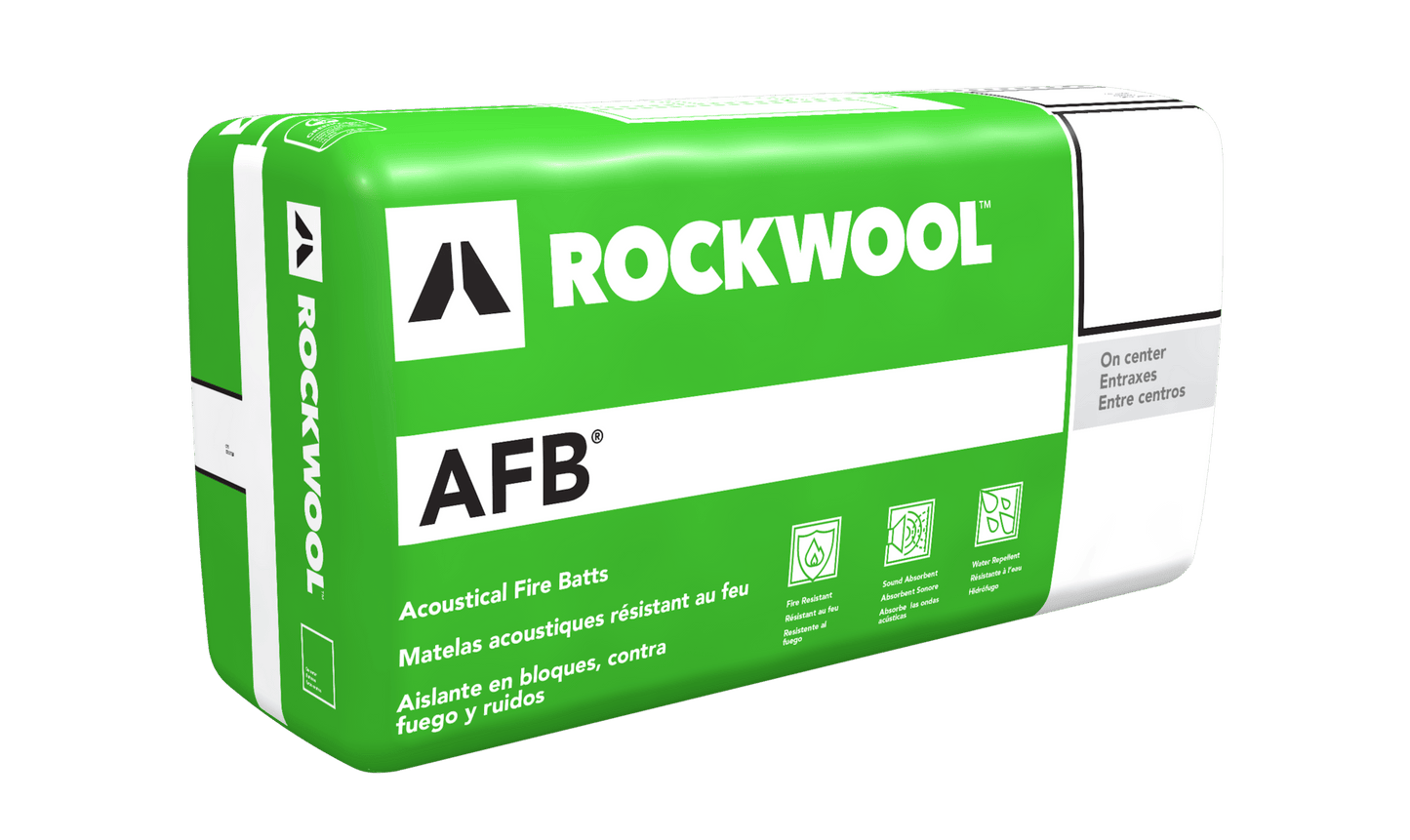
NRC 1.15 / SAA 1.14 at 6 in. per ROCKWOOL USA AFB TDS
Key features
Thick stone wool for demanding interior STC targets within steel-stud limits
Noncombustible fiber with 0/0 ASTM E84 indices in manufacturer documentation
Technical specifications
| Thickness | 6.0 in |
|---|---|
| Width | 16.0 in |
| Length | 48.0 in |
| Coverage | 42.67 sq ft/pack |
| Material | Stone wool (mineral wool), ROCKWOOL AFB® |
| Fire rating | Noncombustible per ASTM E136; 0/0 ASTM E84 indices on ROCKWOOL USA AFB TDS; hourly ratings require listed assemblies. |
| Sound rating | NRC 1.15 and SAA 1.14 at 6 in. nominal thickness per ROCKWOOL USA AFB TDS (11-2025). |
| Density | Nominal density >2.5 lb/ft³ per ASTM C167 on ROCKWOOL USA AFB TDS; manufacturer states density varies with thickness. |
| Framing width | 16 in. batt width for deep 16 in. steel-stud cavities |
| Construction type | Interior steel-stud module (16 in. × 48 in.; confirm stud depth accepts 6 in. insulation thickness) |
| Application area | High-performance interior partitions and floor/ceiling cavities where 6 in. AFB thickness matches tested assemblies and structural stud depth. |
Product details
Six inches of stone wool in a 16 in. × 48 in. module is the upper end of what typical commercial metal-stud corridors can accept without jumping to staggered stud or double-stud walls. Designers specify it when the acoustic criterion is aggressive and the budget still favors batt-and-gypsum solutions over proprietary panels.
The ROCKWOOL USA AFB data sheet assigns NRC 1.15 and SAA 1.14 to the 6 in. thickness row, with third-octave coefficients printed for peer review. That is as high as the published table goes—treat it as the manufacturer’s documented absorption envelope for this product line.
Fire claims remain consistent: noncombustible per ASTM E136 / CAN/ULC S114 language and 0/0 flame spread and smoke developed per ASTM E84. For hourly ratings, nothing replaces a UL or Intertek assembly submittal that matches stud size, insulation thickness, and gypsum type.
Installation teams should plan for weight, straightness, and fastener length at head tracks; services need coordinated relief so crews do not crush batts around conduit bundles.
Coverage of roughly 42.67 square feet per pack matches the YEARS SKU naming—reconcile against distributor data before locking truck counts because bundle policies can change.
Anchor compliance to https://p-cdn.rockwool.com/syssiteassets/o2-rockwool/documentation/technical-data-sheets/commercial/afb-acoustical-fire-batts-techdata.pdf and track issuance dates whenever you duplicate a master spec across projects.
Documents & certifications
Technical data sheet
Manufacturer-tested R-value, coverage, fire notes, and handling—use for submittals, RFIs, and field QA.
Download PDF (opens in new tab)Certifications & compliance
ASTM C665 Type I, ASTM C553 Type VII, CAN/ULC S702 Type I, ASTM E136 noncombustible, ASTM E84 flame spread 0 / smoke developed 0 (Class A per IBC Note 1 on TDS), UL GREENGUARD Gold and USDA BioPreferred 25% biobased per ROCKWOOL AFB product page
Frequently asked questions
What NRC does ROCKWOOL publish for 6 in. AFB?
What NRC does ROCKWOOL publish for 6 in. AFB?
The ROCKWOOL USA AFB technical data sheet dated 11-2025 lists NRC 1.15 and SAA 1.14 on the 6 in. nominal thickness row.
Will this batt alone guarantee STC 55?
Will this batt alone guarantee STC 55?
No. STC is assembly-based. Insulation supports the result, but gypsum layers, seals, doors, and penetrations must match a tested or modeled design.
How do I handle heavy bundles on site?
How do I handle heavy bundles on site?
Follow OSHA lifting guidance, stage pallets close to lifts, and protect finished floors. Thick mineral wool packages are significantly heavier than light-density fiberglass batts.
Can I leave AFB exposed in occupied spaces?
Can I leave AFB exposed in occupied spaces?
Building codes generally require finished surfaces or approved thermal/fire barriers in occupiable spaces. Follow IBC/IECC and local amendments for exposed insulation limits.